Marine Salvage, Finds and Towing Disputes
The most expensive word in boating is help. A voluntary rescue of a vessel in genuine peril creates a salvage claim measured as a share of the boat's value — not an hourly rate — and the claim attaches to the boat itself.
What this report covers
- Salvage requires marine peril, voluntary service and success — no success, no award.
- An award is a share of the saved value, not a fee for time spent, and it can reach a substantial percentage.
- The claim is secured by a maritime lien against the vessel, which follows it into new ownership.
- Towage is contractual and priced, and a written agreement before assistance converts one into the other.
- Finds law applies only to property truly abandoned, and rarely to a modern vessel with a traceable owner.
A boater whose engine has failed will accept a line from anyone. What almost nobody does in that moment is establish what the assistance is — and the difference between a tow and a salvage can be the difference between three hundred dollars and a claim measured as a share of the vessel's value.
The three elements of a salvage claim
Salvage requires all three, and the absence of any one defeats the claim:
- Marine peril. The vessel must be in danger. Not necessarily sinking — drifting toward rocks, disabled in a shipping lane, aground on a falling tide, or exposed to worsening weather can all qualify.
- Voluntary service. The salvor must have no pre-existing duty to assist. A crew member, a contracted tug already engaged, or a government rescue service is not a volunteer.
- Success. Something must be saved. The principle is no cure, no pay: an unsuccessful effort earns nothing, however skilled or dangerous.
Peril is the element that decides most disputes, and it is assessed objectively at the time. The assisting party's characterization does not control, and neither does the owner's — a boat that felt safe to its skipper can have been in peril, and a boat that felt alarming can have been in none. Where the disablement followed a collision, the damage itself usually answers the peril question, and the apportionment of fault for the casualty then runs on a separate track from the salvage award.
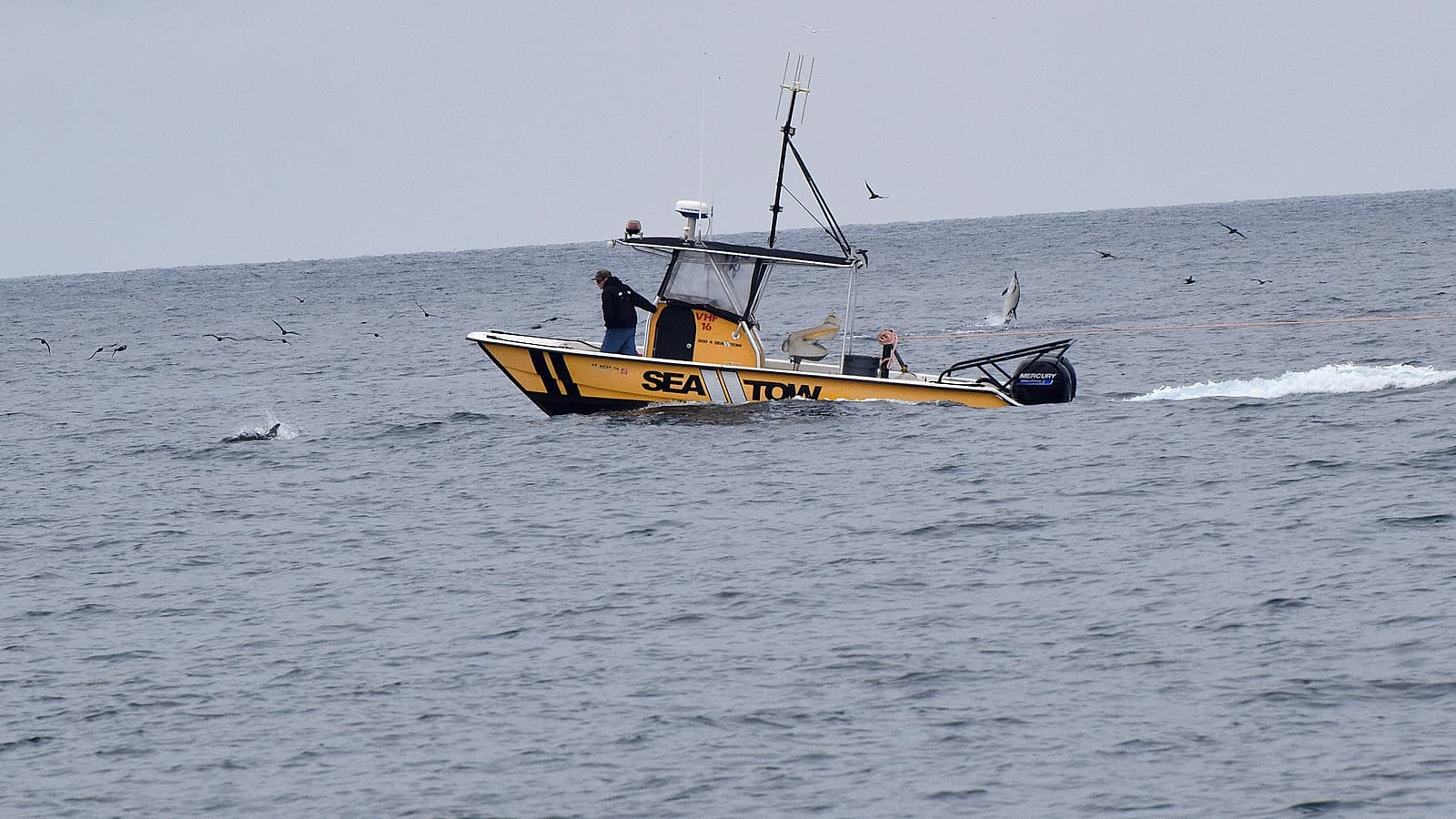
A rescue by the national maritime service is a public function and generates no salvage award. Confusion arises when a commercial operator arrives first, or when a government unit hands the vessel to a commercial towing service — the second stage can be a salvage or a tow depending on the same three elements.
How the award is calculated
Salvage is not compensation for effort. It is a reward, assessed as a proportion of the value saved, and the factors are long-established:
| Factor | Increases the award |
|---|---|
| Degree of danger | Greater peril to vessel and crew |
| Value of property saved | Higher value, higher award |
| Risk to the salvor | Danger accepted by the rescuing party |
| Skill and energy | Professional handling of a difficult operation |
| Time and equipment | Resources committed and withdrawn from other work |
| Promptness | Immediate response preventing worse loss |
Because the award tracks value, the same fifteen-minute operation produces radically different figures for a small runabout and a large yacht. Owners find this counterintuitive and it is the central feature of the doctrine: the reward exists to incentivize rescue of valuable property, so it scales with the property.
The claim attaches to the boat
A salvage claim is secured by a maritime lien against the vessel. That has two consequences owners rarely anticipate. The claim can be enforced against the boat itself rather than only against the owner personally, including by arrest of the vessel. And the lien travels with the vessel into new ownership, which is why a buyer's search should cover salvage claims as well as recorded encumbrances — the same diligence that a title and lien search performs.
Rank matters as much as existence. A salvage lien is one of the highest-priority maritime claims and takes precedence over a preferred mortgage recorded against a documented vessel, on the reasoning that without the salvor there would be no collateral left to secure anything. Salvage liens are also ranked against each other in inverse order of time, so the most recent service is paid first — the opposite of the rule that governs recorded interests.
Two practical points follow. A vessel under arrest is released on security rather than on argument: the owner posts a bond or a letter of undertaking in the amount claimed, and the case then proceeds against the security while the boat goes back in the water. And the claim does not last forever. A salvage action carries a limitation period of two years from the date the service was rendered, which is short enough that a salvor who negotiates for eighteen months and then instructs counsel has very little room left.
Turning it into a tow before the line goes on
Towage is a contractual service: an agreed job at an agreed price, with no requirement of peril and no share of value. Converting an assistance into a towage is a matter of agreeing terms first, and the agreement need not be elaborate:
- Establish on the radio that you are requesting a tow, not salvage assistance.
- Agree the price or the published rate, and that no salvage claim will be made.
- Confirm it on a recorded channel or in writing, and note the time.
- Photograph the conditions — a calm sea and a sheltered position are evidence on the peril question.
- Sign nothing at sea that you have not read, particularly a form headed with salvage language.
Commercial assistance memberships exist for this purpose and price the certainty. Where conditions are genuinely dangerous, the practical reality is that a salvage will be a salvage regardless — but even then, the terms of engagement discussed before the line is passed shape the argument afterwards.
Finds, wrecks and what cannot be taken
The law of finds — title to the finder — applies only to property genuinely abandoned, with the owner's intent to abandon proven rather than assumed. A modern vessel with a traceable owner is governed by salvage, not finds, and taking components from it is the same conversion risk that applies to a derelict on a shoreline.
Historic wrecks sit under further protection. Sunken sovereign vessels remain the property of their flag state regardless of age, and wrecks within marine sanctuaries or on submerged state lands are protected by statute. Recreational divers recovering objects from an unmarked wreck are frequently committing an offense they have never heard of, and the ignorance is not a defense.
Sources
- Cornell Legal Information Institute — Admiralty Law
The jurisdictional framework within which salvage and towage claims are decided.
- Cornell Legal Information Institute — Maritime Lien
The security interest a salvage claim creates against the vessel itself.
- Cornell Legal Information Institute — 46 U.S.C. Chapter 803, Salvage
The statutory provisions on salvage claims and limitation periods.
- Cornell Legal Information Institute — 46 U.S.C. 80107, Sunken Military Craft and Abandoned Property
Limits on salvage and finds where sovereign or protected wrecks are involved.
- NOAA — Office of National Marine Sanctuaries
Protections applying to historic wrecks and sanctuary resources.
- U.S. Coast Guard — Search and Rescue
Government assistance, which is not salvage and generates no award.
Questions readers ask
My engine died in calm water and someone towed me in. Is that salvage?
Probably not, but it depends on peril. Marine peril does not require imminent sinking — a disabled vessel drifting toward a lee shore, in a shipping lane, or in deteriorating weather can be in peril. A boat sitting in flat water inside a sheltered harbor with help minutes away generally is not. That factual question decides whether the assistance was salvage or a tow.
How much can a salvage award be?
It is a share of the value saved, assessed on factors including the degree of danger, the salvor's skill and risk, the value of the property saved, and the time and equipment used. Modest assistance in low danger might attract a small percentage; a difficult rescue of a valuable vessel in serious peril can attract a great deal more. Because it is proportional to value, the same tow costs far more for an expensive boat.
How do I avoid a salvage claim when I need help?
Agree the terms before the line comes aboard. A short exchange on the radio — that the assistance is a tow at a stated price or on the assisting party's published rates, and that no salvage claim will be made — is enough to create a towage contract. Commercial assistance services operate on this basis routinely, and having a membership with one is the cheapest form of certainty.