Skip to content
Crown Legal Report Reporting and reference on United States law All coverageSearch

      Desks

      About

      Desk

      Maritime & Waterfront Law

      Titling and registration, operating rules and collisions, dock and shoreline rights, public access to the water's edge, and vessels nobody claims.

      Maritime & Waterfront Law

      Titling and Registering a Boat Across State Lines

      Vessel registration is issued by the state of principal use, with titling required in most but not all states. Moving a boat's home water usually triggers re-registration within a set period, and a state that did not receive the sales tax will often assess use tax on the same boat.
      6 min readState rule

      Maritime & Waterfront Law

      Riparian and Littoral Rights on Waterfront Property

      Riparian rights attach to land abutting flowing water and littoral rights to land abutting lakes and tidal water. They typically include access, the right to wharf out subject to permitting, and rights in accretion — and they are usufructuary, meaning they are rights of use appurtenant to the land rather than ownership of the water.

      5 min readState rule

      Maritime & Waterfront Law

      Abandoned and Derelict Vessels

      Abandoned vessels are removed under state derelict vessel statutes, with federal authority where navigation or pollution is involved. Removal costs are recovered from the last recorded owner, and abandonment does not transfer liability. Marinas use lien procedures rather than abandonment law to deal with vessels left in a slip.

      5 min readFederal and state

      Maritime & Waterfront Law

      Federally Documented Vessels and the Coast Guard Registry

      Federal documentation registers a vessel of at least five net tons with a national registry, establishing nationality and enabling the preferred ship mortgage. It replaces state titling in most states but not state registration for use, requires annual renewal, and carries strict marking and citizenship requirements.

      6 min readFederal rule

      Maritime & Waterfront Law

      Building or Repairing a Dock: Permits and Approvals

      Dock construction typically requires a federal authorization for work in navigable waters, a state authorization for use of submerged land, and a local building permit. Maintenance and in-kind repair are often exempt from the federal layer, and general permits cover most small residential structures.

      6 min readFederal and state

      Maritime & Waterfront Law

      Public Access to Beaches, Rivers and Lakes

      Public access rights come from the public trust doctrine, from navigability for title purposes, and from state-specific doctrines such as customary use and prescriptive access. The boundary between public and private is commonly a tidal datum or an ordinary high water mark, and it varies more between states than almost any other property question.

      6 min readState rule

      Maritime & Waterfront Law

      Required Safety Equipment and the Boarding Inspection

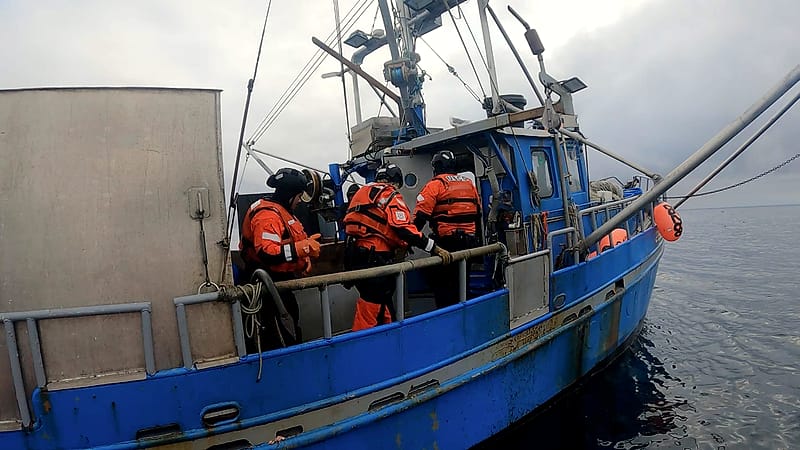
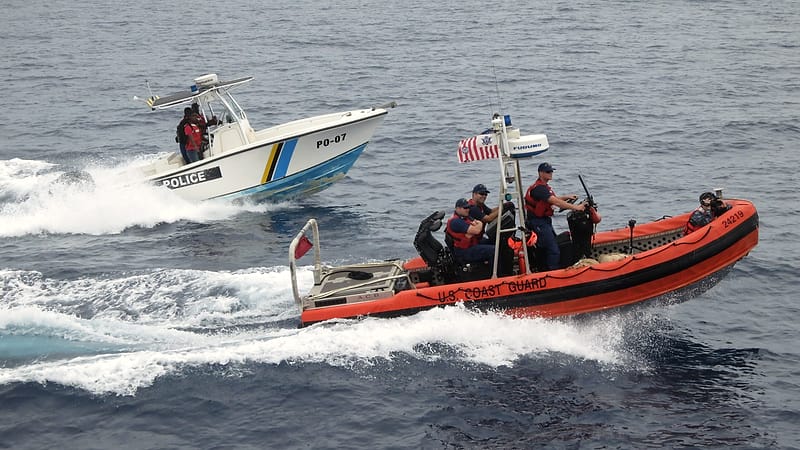
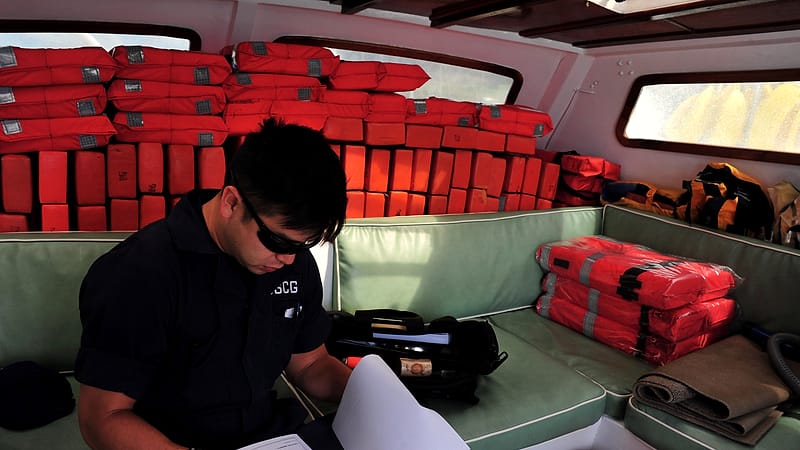
      Federal regulations set carriage requirements for life jackets, visual distress signals, fire extinguishers, sound-producing devices and ventilation, scaled by vessel length. A boarding checks documentation and equipment, and an officer who finds an especially hazardous condition can order the voyage terminated on the spot.

      6 min readFederal rule

      Maritime & Waterfront Law

      Navigation Rules and Fault After a Vessel Collision

      The navigation rules govern conduct between vessels and supply the standard against which fault is measured. Comparative fault has replaced the older equal-division rule, both vessels usually bear a share, and statutory violations trigger a presumption that shifts the burden of proof.

      5 min readFederal rule

      Maritime & Waterfront Law

      Marine Salvage, Finds and Towing Disputes

      Salvage requires a vessel in marine peril, a voluntary service and success. It produces an award based on a share of the property saved, secured by a maritime lien against the vessel. Towage is a contractual service at an agreed price, and the distinction is decided by peril rather than by what either party called it.

      5 min readFederal rule

      Maritime & Waterfront Law

      Liveaboards, Marinas and Mooring Rules

      Living aboard is regulated locally rather than federally, through zoning, marina permits and harbor ordinances. Sanitation rules limit discharge and require pumpout, anchoring is increasingly restricted by state and local rules, and a slip contract is a license that usually gives fewer rights than a tenancy.

      6 min readLocal rule