Aircraft Noise Complaints and Where They Actually Go
A resident under a changed flight path is caught between two authorities: the federal regulator that controls the airspace and the airport operator that controls the ground. Complaining to the wrong one is the usual reason nothing happens.
What this report covers
- Local governments are preempted from regulating aircraft in flight, including by noise ordinance.
- The airport operator, not the city, is the party that can adjust ground procedures and run a noise program.
- Federal noise compatibility planning is the formal route by which land use and procedures change around an airport.
- Individual complaints matter statistically rather than individually, so logging them consistently is what counts.
- Airspace redesign is challenged through the environmental review process and, ultimately, in the courts of appeals.
The complaint usually begins the same way. Nothing was built, nobody moved, and yet aircraft that used to pass somewhere else now pass overhead every few minutes. The resident calls the city, the city says it cannot help, and the impression forms that nobody is responsible. The reality is that three different bodies each hold one piece.
Who controls what
| Body | Controls | Cannot |
|---|---|---|
| Federal regulator | Airspace design, procedures, aircraft noise certification | Compensate residents directly |
| Airport operator | Ground procedures, preferential runway use, noise program, mitigation spending | Direct aircraft in flight |
| Local government | Zoning and building under existing paths | Regulate aircraft operations at all |
The preemption line is the source of most frustration. Local regulation of aircraft in flight is foreclosed, so a municipal noise ordinance cannot reach an aircraft on approach. What a city retains is control of land use — which is why the durable response to a busy path is usually zoning and sound insulation rather than a restriction on flying. The federal side of that division covers not only the published procedures but the shape of the controlled airspace itself, which is designed around approach and departure paths and is the reason traffic concentrates where it does.
Where a complaint should go
Two places, and both are worth using:
- The airport operator's noise office. Most significant airports run a complaint system, often with a web form and an aircraft tracking tool that lets a resident match an event to a specific flight. This is where the data that drives change is collected.
- The federal regulator. For safety concerns — an aircraft that appears unusually low, or an operation that seems irregular — and for complaints about a procedure itself rather than an individual flight.
What makes a complaint useful is consistency rather than eloquence. Date, time, direction, and whether the event is part of a pattern. A resident who logs every event for six months contributes to a dataset; a resident who writes one long letter contributes an anecdote.
Noise offices report on complaint counts drawn from their own systems. An email to a council member does not enter that dataset, so it does not appear in the statistics used to justify a study or a mitigation grant.
The records that decide it
Noise disputes are won and lost on measurement, and almost all of the measurement already exists. An airport of any size holds permanent noise monitoring data from fixed terminals around its perimeter, flight track records correlating each event to an aircraft type and a runway, complaint logs broken down by address, and the modeling files behind the published exposure contours. Federal facilities separately hold the radar and procedure data that show whether traffic actually moved and when.
Most of that is obtainable. Airport operators are usually public bodies or public authorities subject to state records law, so a request naming the monitoring terminal, the date range and the data format tends to produce more than a year of correspondence with a noise office will. The refusals that come back generally rest on security or commercial exemptions, and exemptions asserted over operational data are narrower than they first appear.
The other underused channel is the meeting. Airport boards, port authorities and noise roundtables are governing bodies, and open meetings law gives the public notice of their agendas, a right to attend and, in most states, a right to speak. Mitigation spending is approved in those rooms. A resident who appears with monitoring data on the agenda item that authorizes an insulation program is participating in the decision; a resident writing letters afterwards is commenting on it.
The routes that actually change something
Noise compatibility planning. The formal federal process by which an airport studies its noise exposure, maps the contours, and adopts a program of measures — insulation programs, land acquisition, preferential runway use, changes to ground procedures. Participation is open during the study, and that participation window is the highest-leverage moment available to a resident.
Access restrictions. Curfews and operating restrictions face a demanding federal approval standard requiring a cost-benefit showing, and few new ones are approved. Restrictions that predate the framework were largely preserved, which is why some airports have curfews that a neighboring one cannot obtain.
Environmental review. When a procedure or airspace redesign is proposed, it is examined under the environmental framework, with comment periods and published documentation. Communities that engage at this stage have changed outcomes; communities that begin objecting after implementation are usually arguing about a decision that is already made.
Judicial review. Final orders on airspace matters are reviewed in the courts of appeals rather than in an ordinary trial court, on a short clock. Several communities have obtained remands where review was found inadequate. This is expensive, collective, and time-limited.
Small airports and general aviation
At a general aviation field the actors are the same but the scale is different, and the friction is usually about pattern work — training flights circling for an hour. The realistic levers are the airport's voluntary noise abatement procedures, published preferred routes, and engagement with the operators using the field, most of whom are local flight schools with an interest in staying welcome.
The reason those levers are voluntary is contractual. An airport that has accepted federal development money is bound by grant assurances, and among them is an undertaking to keep the field available to all types of aeronautical activity on reasonable and non-discriminatory terms. That undertaking is what prevents a sponsor from barring a flight school, closing a runway to touch-and-go work, or imposing a curfew of its own motion, and it survives long after the money is spent — commonly twenty years for a project, and indefinitely where land was acquired with federal funds. A user who believes the sponsor has breached it can file a formal complaint with the federal regulator, which adjudicates the dispute and can withhold future grants. Residents occasionally discover the assurances from the other direction, when an airport explains that what is being asked of it is something it has already promised not to do.
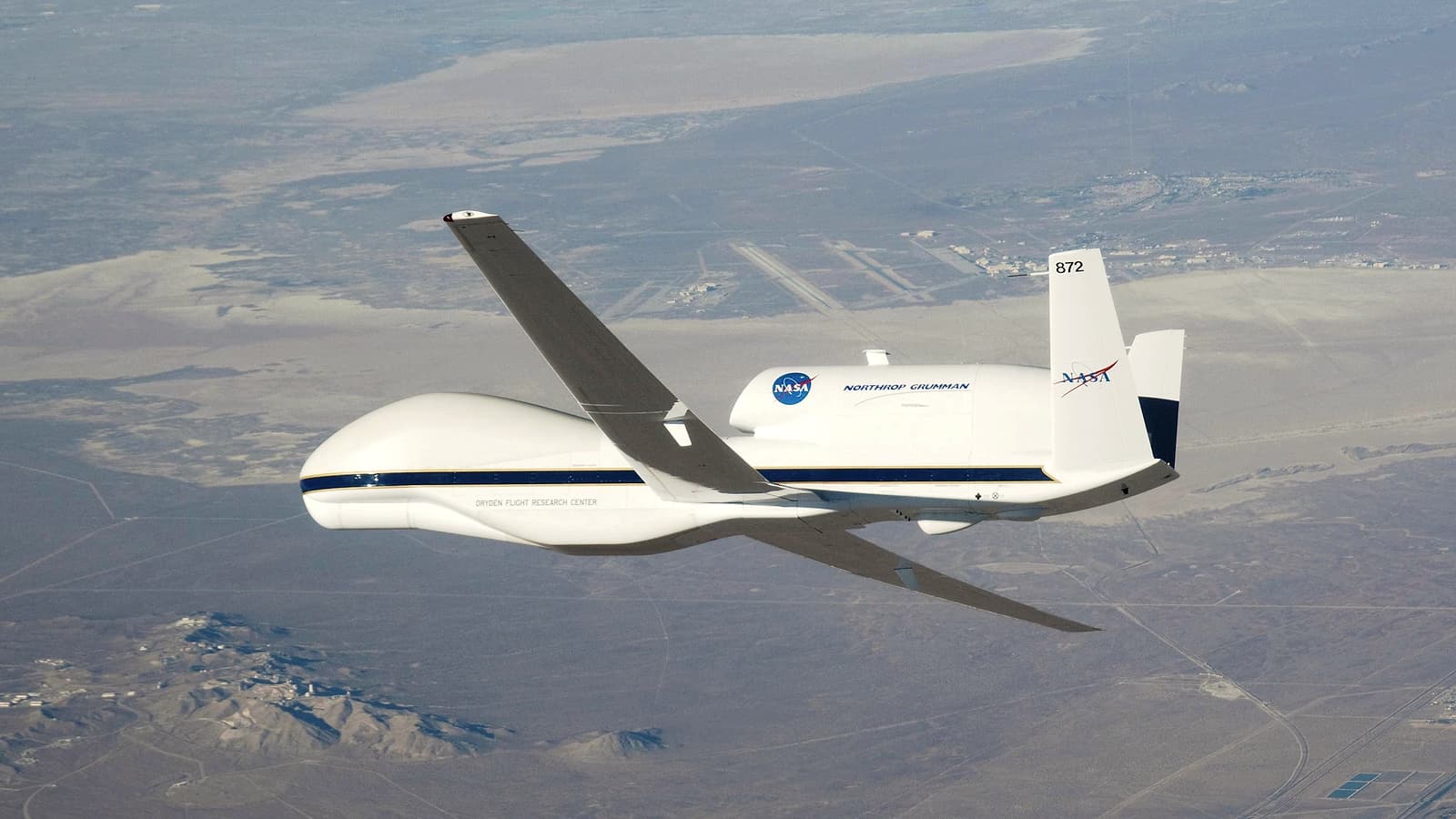
Where the aircraft causing the complaint is unmanned rather than manned, the analysis changes entirely: a drone overhead raises state privacy and nuisance questions that a manned overflight does not, and the complaint route runs partly through state law.
What the process will not produce
Two expectations lead residents into years of wasted effort. The first is compensation for lost property value from overflight alone: claims of this kind exist but are narrow, generally requiring flights so low and frequent as to amount to a taking of an interest in the land. The second is a quick path change. Airspace procedures serve a network, and moving traffic away from one neighborhood moves it toward another, which is precisely why the change is slow, studied and contested.
The measures that do arrive — insulation grants, easement purchases, procedure adjustments — arrive through the planning process, and they arrive years after the complaints that justified them. Knowing that at the start is the difference between engaging with the process and being defeated by it.
Sources
- eCFR — 14 CFR Part 150, Airport Noise Compatibility Planning
The formal study and program process through which noise mitigation is planned.
- eCFR — 14 CFR Part 161, Notice and Approval of Airport Noise and Access Restrictions
The approval standard a new access restriction such as a curfew must meet.
- Cornell Legal Information Institute — 49 U.S.C. 40103, Sovereignty and Use of Airspace
Federal control of navigable airspace, which underlies the preemption of local flight rules.
- FAA — Aircraft Noise
How the regulator receives and routes noise complaints, and what it does and does not control.
- eCFR — 14 CFR Part 36, Noise Standards: Aircraft Type and Airworthiness Certification
The certification standards that limit how loud an aircraft may be at source.
- Council on Environmental Quality — NEPA
The environmental review framework under which airspace and procedure changes are examined.
Questions readers ask
Can my city ban low-flying aircraft over our neighborhood?
No. Regulation of aircraft in flight is federal, and local ordinances directed at flight operations are preempted. What a city can do is act through its airport if it operates one, participate formally in noise compatibility planning, use zoning to control what gets built under existing paths, and take part in environmental review when a procedure is being changed.
Does complaining actually change anything?
Individually, almost never. Statistically, sometimes. Complaint volumes are the data airport noise programs use to justify studies, mitigation funding and procedure change requests, so consistent logging by many residents over months has more effect than a single detailed letter. Log every event through the airport's system, because that is the dataset that gets cited.
Are there curfews?
Some airports have night restrictions, but they are far harder to impose than residents expect. Access restrictions at airports are subject to a federal approval process with a demanding cost-benefit standard, and restrictions that predate that framework were largely grandfathered. A new curfew is a multi-year regulatory undertaking rather than a decision the airport can make.