Naturalization Oath Ceremonies, Deferrals and Name Changes
An approved naturalization application produces a citizen only at the moment the oath is administered, and the gap between the two is longer and less certain than most applicants expect. It is also the last point at which an approval can be withdrawn.
What this report covers
- Citizenship begins at the oath, not at approval of the application.
- Ceremonies are either administrative or judicial, and only a court can grant a name change with the oath.
- The oath can be modified to remove the bearing-arms clauses where a religious or equivalent objection is established.
- A ceremony can be deferred for illness, absence, or new information affecting eligibility.
- Travel outside the United States between approval and the ceremony can create problems that did not exist before.
- The permanent resident card is surrendered at the ceremony and the certificate replaces it as proof of status.
The interview is over, the decision says approved, and the applicant assumes the matter is finished. It is not. Naturalization is completed by an act — the taking of the oath of allegiance — and until that act occurs the applicant remains a permanent resident with everything that implies.
Administrative and judicial ceremonies
Ceremonies come in two forms, and which one an applicant attends is not always a matter of choice. An administrative ceremony is conducted by the agency. A judicial ceremony is conducted by a court that has exercised its authority to administer the oath, and in districts where a court has claimed exclusive authority over a period, applicants are scheduled accordingly.
The practical difference is the name change. Only a court can order one as part of naturalization. An applicant who asked for a name change on the application and is then scheduled for an administrative ceremony will not receive it, and the request has to be pursued afterwards in a state court like any other name change, followed by the separate work of correcting records already issued.
The oath and its modifications
The statutory oath contains several undertakings: renunciation of prior allegiance, support of the Constitution, and — in the clauses that generate the most applications — a commitment to bear arms, to perform noncombatant service, and to perform work of national importance under civilian direction when required.
| Modification sought | What must be shown | Effect if granted |
|---|---|---|
| Omit bearing arms | Religious training and belief, or a deeply held equivalent conviction | The clause is removed; noncombatant and civilian clauses remain |
| Omit bearing arms and noncombatant service | The same showing, extending to all military service | Only the civilian work clause remains |
| Say affirm rather than swear | An objection to swearing; routinely accommodated | Wording changes, substance does not |
| Full waiver of the oath | A physical or developmental disability or mental impairment preventing understanding | Citizenship without the oath being administered |
The evidence for a modification is ordinarily a personal statement plus supporting material from a religious body or others who can speak to the conviction. The conviction need not be theistic, but it must be genuinely held and must go to the undertaking rather than to a particular conflict — an objection to one war does not qualify.
The full waiver is a different instrument entirely and rests on a medical certification. It exists so that applicants who cannot comprehend the oath are not excluded from citizenship by their inability to perform a ceremony, and it is granted on the certification rather than on argument.
Adverse information arriving between interview and ceremony can result in the ceremony being deferred and the approval reconsidered. The window is short but it is real, and applicants should treat the period as part of the application rather than as an afterword to it.
Deferrals and missed ceremonies
A ceremony can be deferred for ordinary reasons — illness, a death in the family, an unavoidable absence — and rescheduling is routine where the applicant notifies the agency. Failure to appear without explanation is different: repeated failures can result in the application being treated as abandoned, and the applicant then faces refiling from the beginning.
Deferrals also occur on the agency's own motion. New arrests, new travel that raises a continuous residence question, a marriage that changes the basis on which eligibility was established, or an enforcement action can each cause a ceremony to be pulled. Where the deferral results in reconsideration and eventual denial, the challenge routes are the ordinary ones, and a hearing on a naturalization denial has its own procedure distinct from a general benefits appeal.
Applicants sitting between approval and ceremony with a complication they have not disclosed are in the most delicate position in the whole process, because the questionnaire completed on the day converts a silence into a statement. Anyone in that position should take advice from citizenship and naturalization lawyer before the ceremony rather than after, since the judgment about what must be volunteered is not one a form can resolve.
What happens at the ceremony
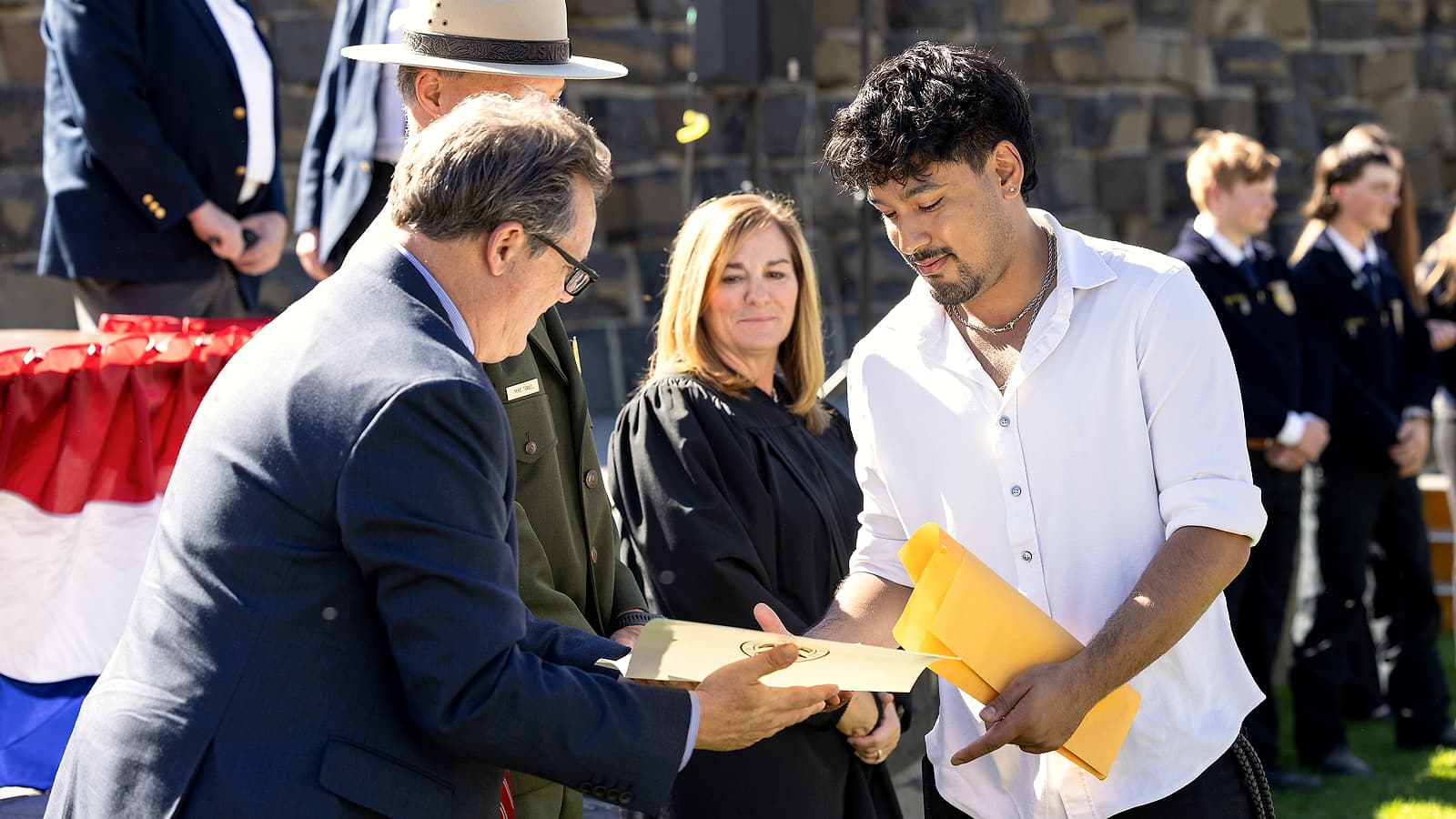
The sequence is consistent whether the venue is a courtroom or a convention hall:
- The questionnaire is completed and reviewed, covering the period since the interview.
- The permanent resident card is surrendered — it ceases to represent anything once the oath is taken.
- The oath is administered collectively, in whatever modified form has been approved for individuals.
- The certificate of naturalization is issued, bearing the name held at that moment.
- Where the ceremony is judicial and a name change was ordered, the order and the certificate align.
The certificate should be checked before leaving. Errors in name spelling, date of birth or country of former nationality are corrected on a replacement application, and correcting them later means correcting every downstream document issued in the interval. Keeping the certificate itself matters as well: it is the primary proof of citizenship and it is the document that supports later filings, including an application for a child residing abroad and the release of any obligation that was conditioned on the applicant's status, such as a public charge bond posted years earlier.
One last consequence deserves a sentence, because it is rarely mentioned at the ceremony itself: naturalization obtained by concealment or willful misrepresentation can be revoked, and the certificate handed over that afternoon does not close the file forever.
Sources
- Cornell Legal Information Institute — 8 U.S.C. 1448, Oath of Renunciation and Allegiance
The statutory oath, its modifications, and the authority to change a name at naturalization.
- Cornell Legal Information Institute — 8 U.S.C. 1421, Naturalization Authority
The division of authority between the agency and the courts over the ceremony.
- eCFR — 8 CFR Part 337, Oath of Allegiance
Ceremony procedure, modified oaths, deferral and the effect of failure to appear.
- eCFR — 8 CFR Part 338, Certificate of Naturalization
What the certificate contains and the rules governing its issuance.
- USCIS Policy Manual — Volume 12, Part J: Oath of Allegiance
Current guidance on ceremonies, waivers of the oath and modifications.
- USCIS — Form N-565, Application for Replacement Naturalization Document
The route to replace or correct a certificate after the ceremony.
Questions readers ask
Can I travel abroad after approval but before the ceremony?
Physically yes, but it introduces risk that did not exist before. The applicant is still a permanent resident and re-enters on that basis, subject to inspection and to any ground of removability. Absence can also cause a scheduled ceremony to be missed, and the questionnaire completed on the day asks about travel since the interview. Where a trip is unavoidable, the sensible course is to keep it short, keep it documented, and answer the questionnaire fully.
What is the questionnaire handed out at the ceremony?
A short set of questions covering the period since the interview: travel outside the United States, arrests or citations, marital changes, and anything affecting eligibility or the willingness to take the oath. It is completed on the day and reviewed before the oath is administered. Answering it inaccurately is not a minor matter — a false statement made at this stage bears directly on the good moral character finding and on any later challenge to the naturalization.
Which name appears on the certificate?
The name the applicant lawfully holds at the moment of the oath. Where a name change was requested and the ceremony is judicial, the court's order and the oath take effect together, so the certificate carries the new name. Where the ceremony is administrative, the agency cannot change a name, and the applicant must pursue an ordinary state court name change afterwards and then correct downstream records separately.