Poll Watchers and Election Observers: What Access Means
Observation is a real statutory function with real access, and it is also the most misunderstood role in an American polling place — because the powers people assume it carries are the ones the statutes specifically deny.
What this report covers
- Authority comes from state statute, and eligibility, credentialing and numbers are all defined by it.
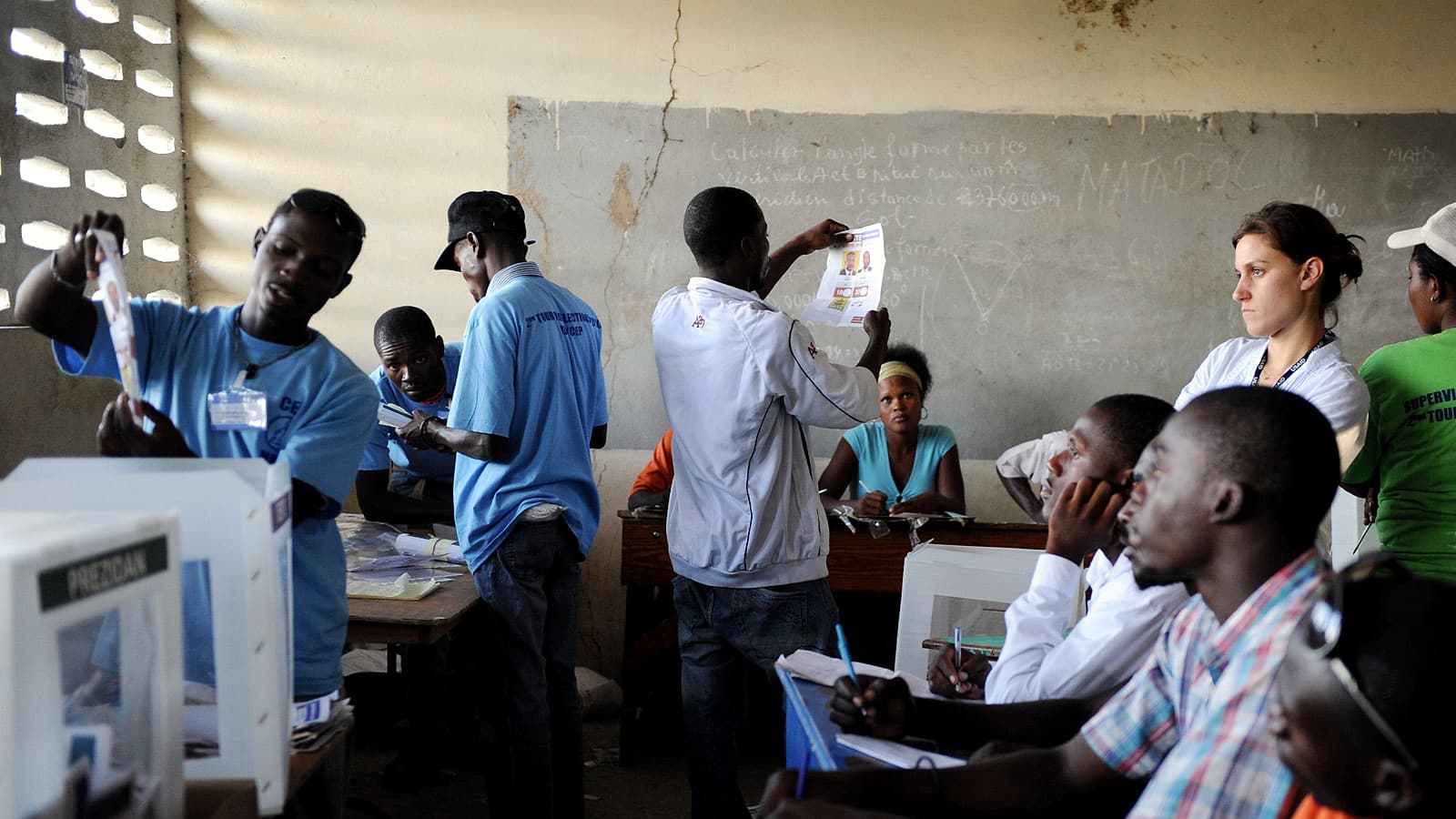
- Observers watch the process; they do not administer it and cannot direct election workers.
- Direct interaction with voters is prohibited almost everywhere, including asking questions.
- Voter intimidation is a federal offense, and conduct that would be tolerated elsewhere is not tolerated here.
- Complaints run through the presiding official first, then through the party's legal channel.
Observation is one of the oldest transparency mechanisms in American elections and one of the most consistently overstated. The statutes give observers a defined position, a defined function and a short list of things they may do — and a longer list of things they may not.
Who may observe, and how they are credentialed
Authority is statutory and entirely state-specific. Typically the statute names who may appoint observers — political parties, candidates, ballot measure committees, and in some states nonpartisan organizations — and sets the process.
The common elements:
- A written credential issued by the appointing party or organization, presented on arrival.
- A cap on the number of observers per party at a given location at one time.
- Eligibility conditions — frequently that the observer be a registered voter, sometimes of that county.
- Advance notice or registration with the election office in some states.
- Separate credentialing for counting locations, which are often the more consequential place to be.
Arriving without a credential, or at a location not covered by it, is the most common reason observers are turned away — and it is a failure of preparation rather than a dispute about access.
The two lists
| Generally permitted | Generally prohibited |
|---|---|
| Watch check-in, ballot issue and the count from a designated position | Interacting with voters in any way |
| Take notes and keep a log | Photography or recording inside the polling place |
| Raise a concern with the presiding official | Directing or instructing election workers |
| Record the reason a provisional ballot was issued | Handling ballots, rolls or equipment |
| Make a formal challenge where the state permits it | Standing where voters mark or deposit ballots |
| Observe the closing procedure and seals | Campaigning, or wearing candidate material |
The distinction underneath both lists is between observing and participating. An observer who believes a rule is being broken has one immediate route: tell the presiding official, calmly, once, and record the response. Everything beyond that is escalation through the appointing organization and the state election authority, after the fact.
Conduct that would pass as robust elsewhere — following voters, photographing them, questioning their eligibility aloud, positioning oneself to be seen watching — can constitute intimidation, and intimidation of voters is prosecutable federally regardless of intent to intimidate being denied. The safest posture is to be present, visible, and silent toward voters.
Early voting sites and drop boxes
Observer statutes were written for a single day in a single room, and a large share of American voting no longer happens that way. Where a state runs an early voting period, the polling place rules generally extend across it — but the credential frequently has to name the site, and an observer who assumes that one credential covers a county's worth of locations over two weeks will be turned away at the second one.
Drop boxes are the harder case. They are often not polling places within the statutory definition, which means the observer statute neither authorizes access to them nor regulates conduct around them. That is a gap rather than a permission. Stationing oneself at a box to watch who deposits ballots has drawn federal injunctions on a straightforward ground: a stranger photographing voters at the moment of casting is intimidation whether or not a word is spoken. Whatever a state's observer law omits, the federal prohibition operates at the box exactly as it operates at the check-in table.
Useful observation of drop boxes is documentary rather than physical. The material that shows whether the process was followed is the retrieval log, the two-person collection requirement most states impose, the seal numbers recorded at each pickup, and the chain of custody sheets that follow a container from the box to the processing room. Those are records held by an agency, and records can be asked for after the fact.
Challenges, where they exist
Many states permit a formal challenge to a voter's eligibility at the polls, and in most of those an observer may make one. The procedure is prescribed: the challenge is stated on the record with its ground, the voter is given an opportunity to respond, and where it is unresolved the voter casts a provisional ballot rather than being refused.
Two constraints are worth understanding before making one. Challenges must rest on a permitted ground — usually residence, identity, citizenship or a disqualifying conviction — rather than on suspicion. And several states impose penalties for challenges made without a good faith basis, because the tactic of challenging voters in volume to slow a line has a long history.
The formalities are stricter than most observers expect. Several states require the challenge to be put in writing and signed under penalty of perjury, naming the voter and the specific ground relied on. Several require it to be made before the ballot is issued, so a challenge raised after the voter has been handed one is simply out of time. Mass pre-election challenges filed against lists of names generated by address-matching software have repeatedly failed on the same point: the ground has to attach to the individual voter, and a database mismatch is not itself a ground. The federal rules that govern removals from a roll constrain what those lists can be used for as well.
Observing the count
The count is where observation does the most work and where credentials are most often overlooked. Central count locations, absentee processing boards and canvass meetings each have their own access rules, and the useful observation is procedural: seals intact and recorded, chain of custody logged, reconciliation of ballots issued against ballots cast, and the handling of ballots set aside for adjudication.
Notes taken here are far more valuable than notes taken at a precinct, because they record whether the process a state prescribes was followed. That record is also the raw material for a public records request afterwards, which is how observation turns into documentation that survives the day.
What to do with what you saw
Contemporaneous notes, with times, locations and names, are what makes an observation report usable. A complaint filed a week later saying that things seemed disorganized achieves nothing; one saying that at a stated time a named official told a named category of voters something specific is actionable.
Routes for a complaint run to the local election office, the state election authority, the appointing party's legal channel, and for federal elections, federal enforcement. Where the concern is about a body's decision-making rather than a polling place, the applicable framework is different again — canvassing boards and election commissions are usually subject to open meetings law, which carries its own access rights and its own remedies. Outside the polling place the analysis inverts: recording officials performing public duties in public is protected in most of the country, which is why the prohibition inside the room has to rest on ballot secrecy rather than on official preference.
Sources
- Cornell Legal Information Institute — 52 U.S.C. 20511, Criminal Penalties
Federal penalties for intimidating or interfering with voters and election officials.
- Cornell Legal Information Institute — 52 U.S.C. 10307, Prohibited Acts
The prohibition on intimidating, threatening or coercing voters.
- U.S. Department of Justice — Federal Law Constraints on Poll Watching
Federal guidance on election-day activity and the limits it imposes.
- U.S. Election Assistance Commission — Election Official Resources
Administrative guidance on polling place management and observer accommodation.
- Cornell Legal Information Institute — 52 U.S.C. 21082, Provisional Voting
The provisional route that a challenged voter is entitled to, which observers frequently witness.
- U.S. Election Assistance Commission — Election Administration and Voting Survey
Data on polling place operations, including challenge and provisional practice.
Questions readers ask
Can an observer talk to voters?
Almost never. Nearly every state prohibits observers from interacting with voters, including asking questions, offering assistance or discussing the process. The reasoning is straightforward: an unofficial person questioning voters at a polling place is difficult to distinguish from intimidation, which is a federal offense. Questions go to the presiding official instead.
May an observer photograph the polling place?
Usually not, and this is one of the most consistently restricted activities. Most states prohibit photography and recording inside a polling place to protect ballot secrecy, and observer credentials do not create an exception. The rules for recording officials in public spaces are different and much more permissive, but they stop at the polling place door.
What happens if an observer is asked to leave?
The presiding official generally has authority to remove any person, including a credentialed observer, who interferes with the process. The correct response is to comply and escalate afterwards through the party or organization's legal channel and to the state election authority — not to argue at the table. An observer removed for refusing to comply loses both the position and the credibility of the complaint.