Recording Police and Public Officials
The right to record officers in public is now recognized across most of the country, and it is bounded in ways that matter: by where you stand, by what you say, and by whether the recording is open or secret.
What this report covers
- A right to record officers in public is recognized in most federal circuits, as an aspect of free speech.
- The right is subject to reasonable restrictions on distance and interference, not to an officer's preference.
- Two-party consent statutes generally do not apply where there is no reasonable expectation of privacy.
- Police may not delete footage or seize a phone without a warrant or a recognized exception.
- Obstruction and interference charges are the realistic risk, and they turn on conduct rather than on recording.
The legal question is largely settled and the practical one is not. Most federal circuits recognize a right to record officers performing their duties in public. What continues to produce arrests is not the recording but everything around it — distance, tone, refusal to move, and the ambiguity of the word interference.
What the right covers
The recognized right is grounded in free speech and press protections: gathering information about public officials performing public duties in public places is protected activity, and it does not depend on being a journalist.
Its established limits are of a familiar kind — reasonable restrictions on time, place and manner:
- A genuine safety perimeter around a scene, applied to everyone rather than to the person recording.
- Orders to move that serve a real operational purpose.
- Restrictions inside non-public spaces, where the public has no right to be in the first place.
- Prohibitions on physically interfering with an officer's actions.
What the limits do not include is an officer's preference not to be recorded, or a general instruction to stop filming. A restriction that applies only to the person with a camera is the clearest sign that the line has been crossed.
Complying with an order to step back while continuing to record from the new position is both lawful and the strongest practical posture. It removes the interference argument entirely and preserves the footage, which is the thing that matters afterwards.
The consent statutes, and why they usually do not apply
A dozen or so states require all parties to consent to recording a communication. Those statutes protect communications made with a reasonable expectation of privacy, and officers performing duties in public do not have one — which is why open recording of a traffic stop or a street encounter is not a wiretap offense in those states.
| Scenario | Generally lawful | Risk |
|---|---|---|
| Openly recording officers on a public street | Yes | Interference, if you crowd the scene |
| Recording from your own doorway | Yes | Low |
| Recording inside a police station lobby | Depends on posted rules | Trespass or a facility rule |
| Secretly recording a private conversation | Two-party states: no | Wiretap offense |
| Recording inside a courtroom | Almost never | Contempt |
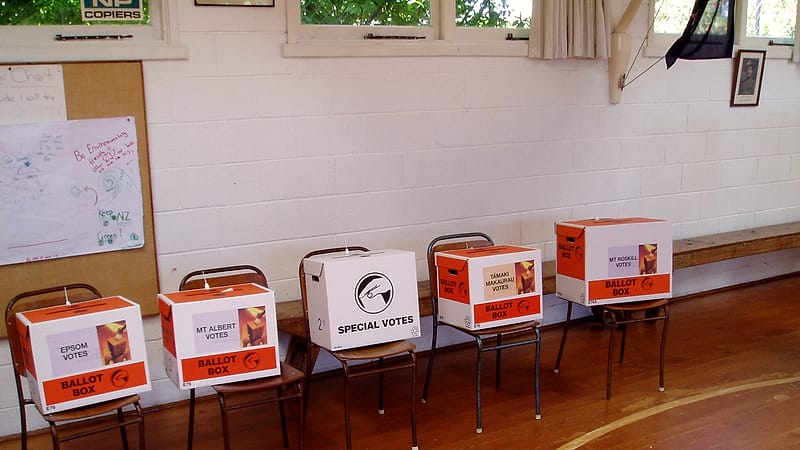
The courtroom and polling place rows are the exceptions that surprise people. Courts prohibit recording nearly universally, and polling places restrict it to protect ballot secrecy — neither is affected by the public duties reasoning.
Officials who are not police
The reasoning that protects recording an arrest protects recording a building inspector, a code enforcement officer, a counter clerk or a school district administrator carrying out their duties, and those encounters are far more common than street stops. What changes is the setting. A sidewalk is a traditional public forum; a permit counter inside a municipal building is not. A government office may impose content-neutral restrictions on filming inside it — nothing past the lobby, nothing that captures other members of the public waiting in line — provided the rule applies to everyone and predates the arrival of the camera rather than being announced to it.
Public meetings sit at the permissive end of the range. Most state open meetings statutes expressly allow any member of the public to record a meeting of a governing body, limited only by rules against disruption, so an instruction to stop recording an open session is frequently unlawful on the face of the statute rather than as a matter of constitutional argument. The same statutes define when a body may lawfully close a session, which is the point at which the recording right stops.
Federal facilities are the restrictive end. Regulations governing property under federal control generally prohibit photography inside without permission, and that rule is enforced consistently at courthouses, immigration offices and benefit offices. The distinction that decides most of these disputes is not who the official is but whose building it is.
Handling an encounter
- Stand where you are lawfully entitled to be, and back away when directed while continuing to record.
- Keep hands visible and narrate rather than argue. A calm statement that you are recording and will comply with lawful orders is worth more than a rights lecture.
- Do not touch anyone or anything, and do not cross tape.
- Ask whether you are free to leave, and if the answer is yes, leave with the footage.
- Do not consent to a search of the phone; a demand is not a request.
- Back up immediately — a cloud upload as it happens defeats deletion entirely.
If the phone is seized or the footage is deleted
Seizure of a phone requires a warrant or a recognized exception, and searching its contents generally requires a warrant regardless of how the phone came into official hands. Deletion of a recording is treated as destruction of evidence and has supported both suppression in criminal cases and civil claims against officers and departments.
The obstacle in a civil claim is rarely the underlying right and usually the immunity analysis. An officer is liable in damages only where the right was clearly established in that jurisdiction at the time of the conduct, and because the circuits recognized the recording right at different points, the same facts have produced different outcomes depending on where the phone was held. A parallel problem attends the retaliatory arrest claim, which ordinarily fails if the officer had probable cause for some offense, however minor — the recognized way around it being evidence that people engaged in the same conduct without a camera are not arrested. That is why footage of the surrounding crowd, and of who was left alone, can matter as much as footage of the officer.
The documentation that makes such a claim viable is gathered in the first hour: the officers' names and badge numbers, the vehicle numbers, the time and location, the names of witnesses, and a written account produced immediately rather than from memory weeks later. Where footage exists in a cloud account, its metadata is what establishes what was recorded and when.
Getting the official recording
The recording that matters most in a dispute is frequently the department's own. Body-worn and dashboard footage is a public record in most states, subject to exemptions and to redaction, and the request should be made immediately because retention schedules are short — some as brief as a few months for non-flagged footage.
The request runs through the ordinary records process, and it is worth drafting with the specificity that process rewards: naming the incident number, the date, the time window and the units involved rather than describing the event. Where the department withholds, the exemptions cited will usually be the enforcement and privacy ones, and both have limits worth testing on appeal.
Sources
- Cornell Legal Information Institute — First Amendment
The speech and press protections that the right to record is grounded in.
- Cornell Legal Information Institute — 18 U.S.C. 2511, Interception of Communications
The federal wiretap prohibition and the expectation-of-privacy element.
- Cornell Legal Information Institute — Riley v. California
The warrant requirement for searching the contents of a mobile phone.
- Cornell Legal Information Institute — 42 U.S.C. 1983, Civil Action for Deprivation of Rights
The claim available where a recording right is violated by a state actor.
- U.S. Department of Justice — Civil Rights Division
Federal guidance and enforcement concerning the right to record police activity.
- Cornell Legal Information Institute — Obstruction of Justice
The charge most often brought where a recording encounter escalates.
Questions readers ask
Can an officer order me to stop recording?
An officer can lawfully direct you to move — back from a scene, off a roadway, out of a doorway — and can enforce a genuine safety perimeter. What they generally cannot do is order you to stop recording from a lawful vantage point where you are not interfering. The distinction is between a restriction on where you stand and a prohibition on what you record.
Does my state's two-party consent law make it illegal?
Generally not for open recording of officers performing public duties, because those statutes protect communications made with a reasonable expectation of privacy. Courts have consistently held that officers acting publicly do not have that expectation. Surreptitious audio recording of private conversations is a different matter and remains restricted in two-party states.
Can they take my phone or delete the video?
Deleting a recording is treated seriously and has produced both suppression and civil liability, as destruction of evidence and as a constitutional violation. Seizing a phone requires a warrant or a recognized exception, and even where a phone is lawfully seized, searching its contents generally requires a warrant. If footage is deleted, the fact of deletion is itself evidence worth documenting immediately.