Vegetation Management and Tree Removal by a Utility
A utility crew removing a mature tree is exercising a property right the owner probably never read and a reliability obligation the owner has never heard of. The narrow ground on which an objection can succeed lies between the two.
What this report covers
- The recorded easement, not the visible line corridor, defines what may be cut.
- Federal reliability standards compel clearing around transmission conductors and leave little discretion.
- Distribution trimming is governed by state rules and utility specifications rather than by federal standards.
- Notice requirements before removal are common and are the most frequently breached rule.
- Damage claims turn on whether the work exceeded the easement or fell below arboricultural standards.
- Trees outside the easement that threaten a line raise different and more contestable questions.
Vegetation contact is one of the largest single causes of electrical outages and a recurring cause of wildfire. That fact has produced a regime in which cutting is not discretionary, and it explains why an owner's objection is so often met with a refusal rather than a negotiation.
Where the right to cut comes from
A utility crew on private land is relying on one of four sources, and identifying which one matters more than any argument about the tree.
- A recorded easement granting a right of way for lines, with express language about trimming and removal.
- A franchise or statutory right to place facilities within a public road right of way, which typically extends further from the pavement edge than owners expect.
- A prescriptive right established by long open use where no instrument was recorded.
- A statutory safety power permitting abatement of a hazard threatening the line, sometimes extending beyond the corridor.
The recorded easement is the document that decides most disputes, and its terms vary enormously. Older instruments often grant the right to cut, trim and remove trees that may interfere with the line, which is a broad grant construed broadly. Others are limited to a stated width, or require the utility to pay for timber removed. An owner who has not read the instrument is arguing without the governing text.
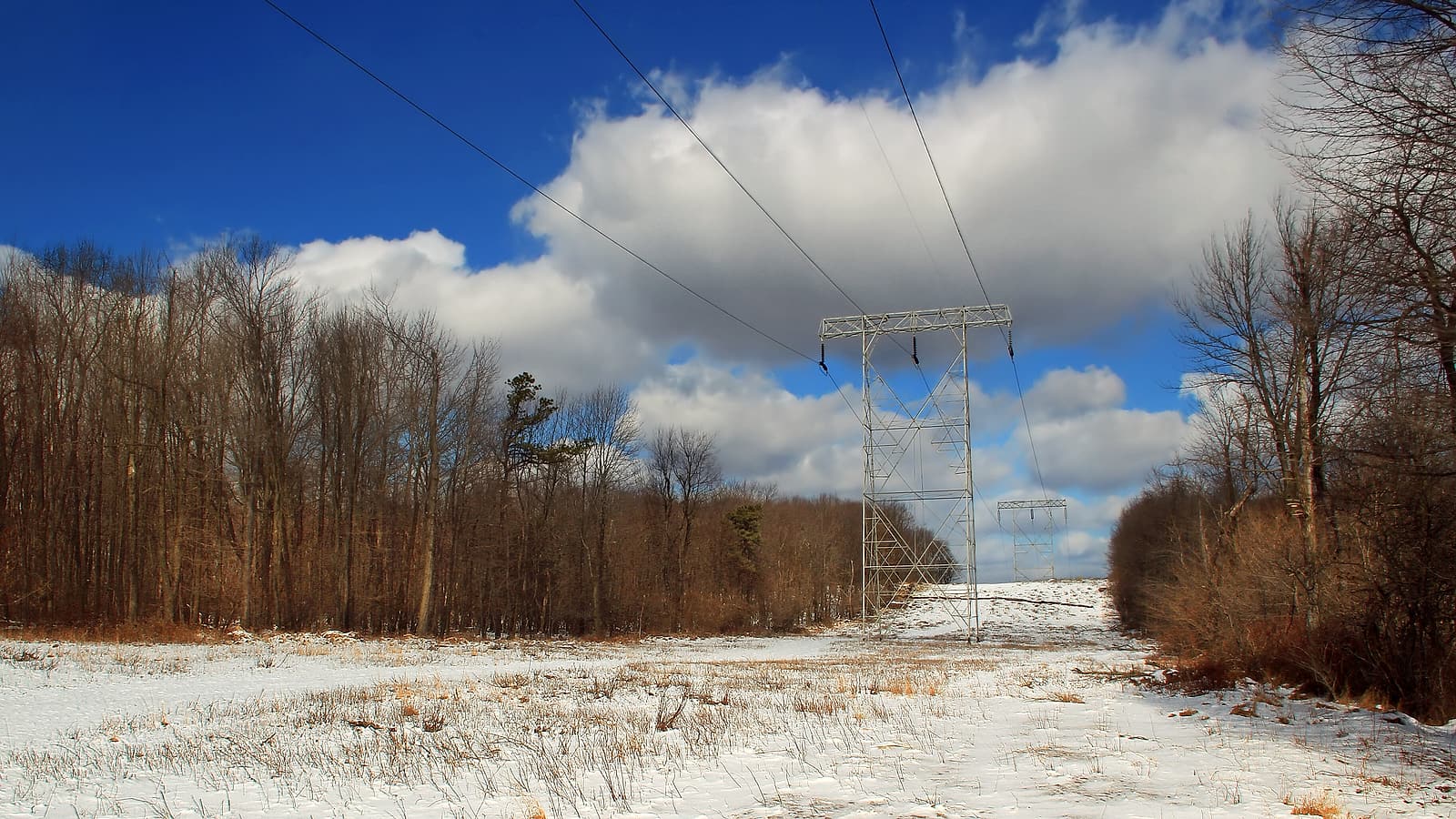
A right of way described as a fixed width is measured from the centerline of the facility, not from the outermost conductor. Trees that appear to be well clear of the wires frequently sit inside the granted area.
Why transmission clearing is not negotiable
Vegetation management on high voltage transmission is governed by mandatory reliability standards adopted under federal law and enforceable by penalty against the utility. Those standards require the owner of a transmission facility to maintain clearances sufficient to prevent flashover, to inspect the corridor on a defined cycle, and to document what was found and what was done.
The consequence is that clearing along a transmission right of way is performed to a specification the utility cannot waive for an individual landowner. Requests to leave a particular tree fail not because the utility is unsympathetic but because granting them creates an audited compliance exposure.
Distribution lines — the lower voltage circuits along neighborhood streets — are different. There is no equivalent federal mandate; clearing is governed by state commission rules, the utility's own specification and a trimming cycle measured in years. There is more discretion here, and consequently more room for an owner to negotiate species selection, directional pruning or removal with replacement.
Wildfire risk has narrowed that discretion in several states. Where a utility operates in a designated high fire threat area, commission rules can impose clearances well beyond ordinary reliability trimming, require removal of hazard trees capable of striking a conductor from outside the corridor, and compel annual rather than cyclical inspection. In those districts an owner's negotiating position is closer to the transmission position than to the neighborhood one.
What an owner can actually contest
| Objection | Prospects | What it turns on |
|---|---|---|
| The tree should not be touched at all | Weak inside an easement | The express words of the grant |
| The work went beyond the easement width | Strong | Survey and the recorded description |
| No notice was given before removal | Often strong | State rule or tariff notice requirement |
| The pruning was performed badly | Moderate | Accepted arboricultural practice and expert opinion |
| Debris was left, or land was damaged | Strong | Restoration obligations in the easement |
| Removal of a tree outside the corridor | Contestable | Whether a genuine hazard to the line existed |
Notice is the most productive objection because it is the most often skipped. Many states require written notice before removal of a tree above a stated diameter, an opportunity for the owner to be present, and in some jurisdictions an offer of replacement planting. A crew that removes a mature specimen without that notice has breached a rule that is easy to prove and that a commission will enforce.
Claims, and the awkward question of value
Where clearing exceeded the easement, the claim is trespass; where it was done badly within the easement, the claim is negligence. Both run into the same valuation problem, because a mature tree has no market and its replacement cannot be bought.
Courts resolve this in one of three ways: the cost of restoring the property so far as reasonably possible, the diminution in the property's value attributable to the loss, or an appraised value of the specimen itself derived from accepted arboricultural methods. Several states also provide statutory multiple damages for wrongful cutting of timber, and those statutes occasionally apply to utility work performed outside a right of way.
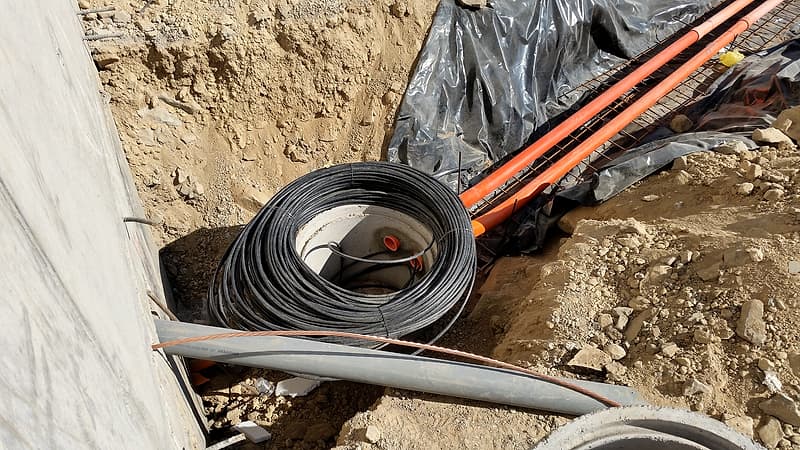
Two adjacent points frequently arise. Where the same corridor carries buried facilities, planting choices are constrained on a separate legal footing entirely, because excavation for a replacement tree requires notice before any digging begins. And where the property sits in a district with its own controls, removal or replacement may need a second approval, since landscape features are regulated alongside structures in many designated areas and the utility's authority does not displace that review.
Sources
- Cornell Legal Information Institute — Easement
The property interest under which most vegetation work on private land is done.
- Cornell Legal Information Institute — 16 U.S.C. 824o, Electric Reliability
The authority for mandatory reliability standards, including vegetation clearance.
- Cornell Legal Information Institute — Trespass
The claim where clearing exceeds the scope of the easement granted.
- Cornell Legal Information Institute — Negligence
The standard applied to the manner in which trimming is performed.
- Cornell Legal Information Institute — Eminent Domain
The power behind condemned corridors where an easement was not voluntarily granted.
- U.S. Energy Information Administration — Electricity
Federal reporting on interruptions, of which vegetation contact is a leading cause.
Questions readers ask
Can I refuse entry to a crew coming to trim on my land?
Generally not where a recorded easement or a franchise right authorizes the work, because that is a property interest the utility already holds and refusing access can be enjoined. What you can do is require the crew to identify the instrument relied on, confine the work to its terms, and observe any notice rule the state imposes. If the tree lies outside the easement, the analysis changes and consent usually does matter.
The tree was healthy and nowhere near the wire. What now?
Document it before anything is removed from the site: photographs of the stump and the debris, the distance to the nearest conductor, and the species and diameter. Then obtain the easement instrument and the utility's clearance specification. A claim succeeds where the work went beyond what the easement or the specification permitted, and damages are usually measured by restoration cost or diminution in property value.
Who is liable if a trimmed tree later falls on my house?
It depends on what caused the failure. Negligent pruning that destabilizes a tree, or topping that induces decay, can make the utility or its contractor liable, and arborist testimony is normally required to establish it. If the tree failed from disease or storm loading unrelated to the work, liability usually rests with the owner, since owners are responsible for the condition of trees on their own property.