Outage Credits and What a Utility Owes After a Storm
The freezer full of spoiled food after four days without power feels like the utility's fault, and legally it usually is not. The two routes to recovery — a tariff credit and a negligence claim — are governed by entirely different tests, and the more generous one is the narrower.
What this report covers
- Filed tariffs generally exclude liability for consequential losses from interruption of service.
- Storm damage is usually treated as a cause beyond the utility's control, defeating most claims.
- Claims succeed most often where the failure was equipment-specific rather than weather-driven.
- Some states require automatic credits after outages exceeding a stated duration or frequency.
- A claim must be filed with the utility first, on its form and within its stated period.
- Homeowner insurance, not the utility, is the usual source of recovery for spoilage and water damage.
Restoration and compensation are separate obligations, and only the first is reliably owed. A utility must restore service with reasonable diligence and must report on how it did so. Whether it pays for what happened while the power was off depends on a limitation clause most customers have never read.
The clause that decides most claims
Regulated service is supplied under a filed tariff, and every such tariff contains a limitation of liability. The standard formulation disclaims responsibility for interruption, variation or failure of service caused by conditions beyond the utility's reasonable control, and excludes consequential and indirect damages in any event, leaving liability only for injury caused by the utility's own negligence or willful misconduct.
Courts enforce these clauses, and the reasoning is regulatory rather than contractual. Because rates are set on the assumption that the utility does not insure every customer's downstream losses, permitting those recoveries would shift the cost onto the rate base — meaning onto other customers — through a mechanism no commission approved. A tariff limitation is therefore treated as part of the rate, not as fine print the customer failed to negotiate.
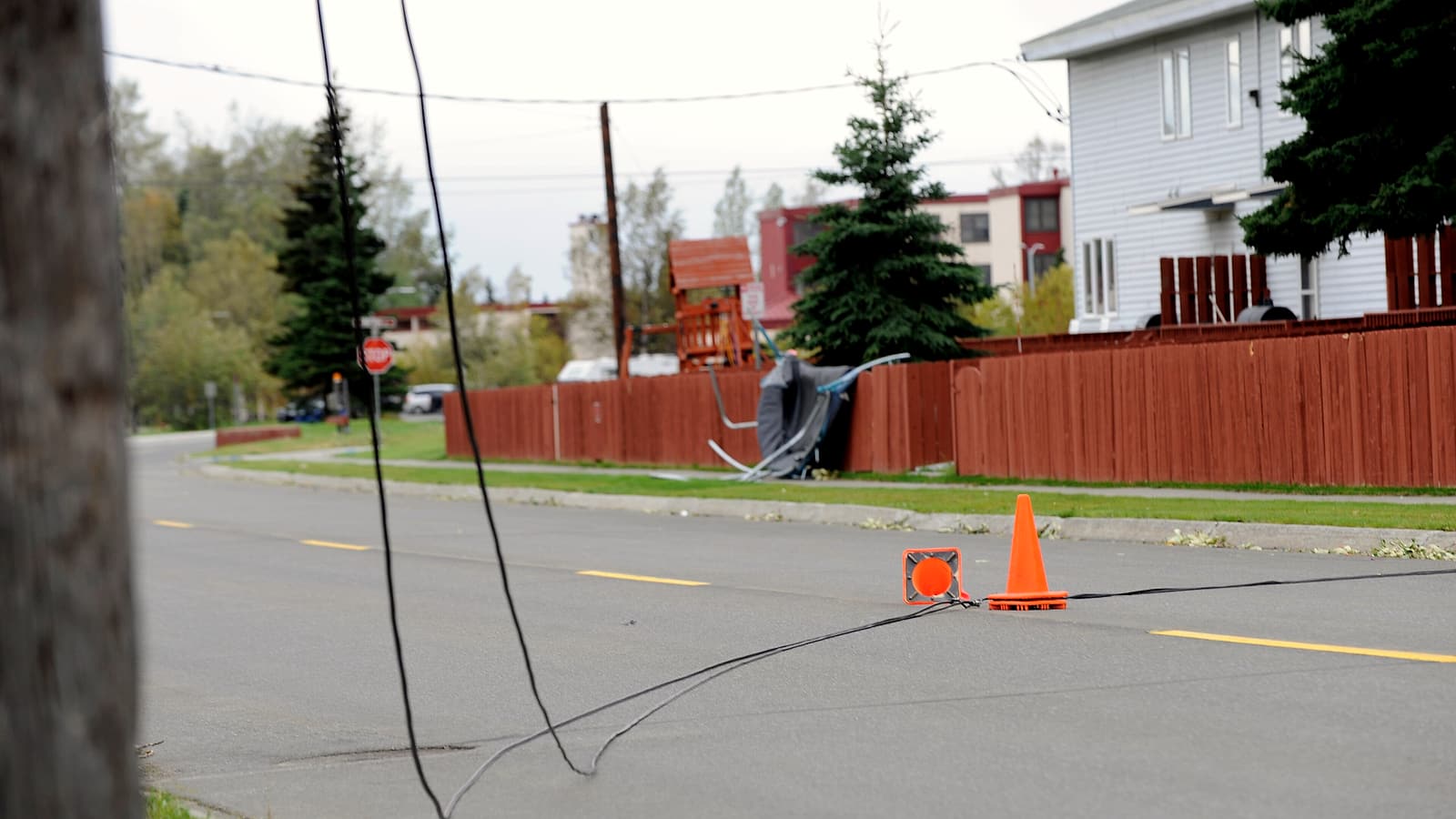
Wind, ice, lightning and falling trees are the archetypal causes beyond reasonable control. A claim arising from a named storm that took down conductors across a service territory will nearly always be denied, and the denial will usually be right.
Which outage claims actually succeed
The claims that survive share a feature: the failure was specific to the utility's own conduct or equipment rather than to the weather.
- A transformer or service drop that failed in ordinary conditions, particularly where the customer had reported a problem beforehand.
- A switching or restoration error that energized a circuit incorrectly and damaged equipment.
- Sustained overvoltage or a lost neutral, which destroys appliances and leaves physical evidence.
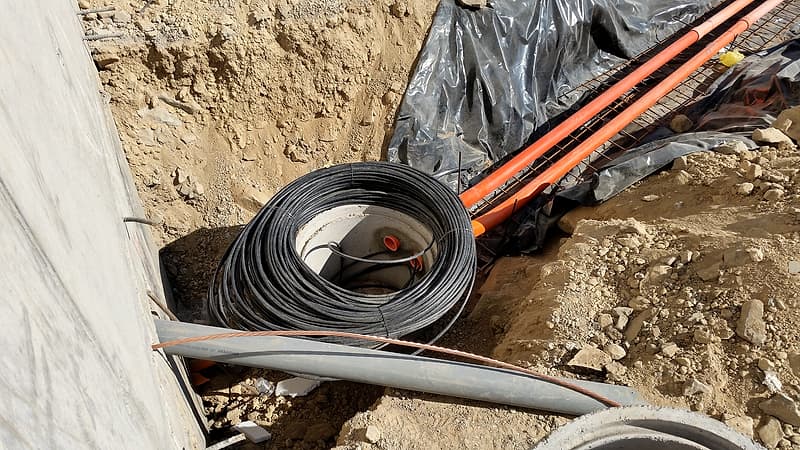
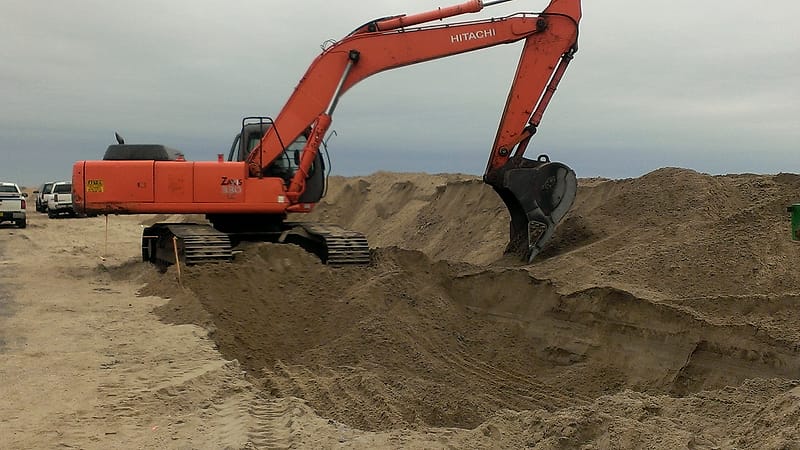
- Excavation or line work by the utility or its contractor that severed a service.
- Failure to act on a documented hazard — a leaning pole, a reported arcing connection.
The evidentiary consequence is that a prior complaint matters enormously. A customer who reported flickering, a burning smell or a damaged pole, and can show the report, converts an act-of-nature claim into a notice-and-failure claim. Where the outage followed tree contact, the analysis moves to whether the utility maintained the clearance it is obliged to maintain, which is one of the few storm-related theories that survives the limitation.
Service quality credits, which are a different animal
Separately from liability, many commissions impose performance standards on distribution utilities and require credits when they are missed. These are administrative entitlements: no fault need be shown, and no damage need be proved.
| Trigger | Typical standard | How it is paid |
|---|---|---|
| Extended single outage | Continuous interruption beyond a stated number of hours | Fixed credit on the next bill |
| Repeated interruptions | More than a set number of outages within twelve months | Fixed credit, sometimes escalating |
| Missed appointment or restoration estimate | Utility fails a commitment it made | Credit on request |
| System-wide reliability shortfall | Average interruption indices below the approved target | Penalty to the utility, not to customers |
| Major event exclusion | Declared storm events removed from the calculation | No credit for those hours |
The last row is where expectation and rule diverge. Most standards exclude declared major events precisely so that a utility is not penalized for a hurricane, with the result that the outages customers most resent are the ones least likely to generate a credit. Where a credit is due, it is claimed by citing the rule and the outage record, and the commission's consumer division will enforce it where the utility declines.
Filing a claim so it is not dismissed on procedure
Utilities require claims on their own form, within a stated period, and refuse late ones. The sequence that preserves every option:
- Record the outage start and restoration times, and the utility's own outage reference.
- Photograph the loss before disposing of anything, and keep receipts for mitigation.
- Note whether the failure was localized to your service or area-wide, which decides the theory.
- File the utility claim promptly, describing the cause factually rather than arguing fault.
- Notify the homeowner or renter insurer at the same time, because spoilage and water damage coverage is frequently available and does not depend on the utility's fault.
- Keep the denial letter, which insurers and commissions both ask for.
Two further points are commonly missed. Restoration priority is set by system logic — transmission, substations, main feeders, then laterals and individual services — rather than by who called first, so complaints about being last are usually complaints about circuit topology. And where the outage was caused by a third party striking a buried line, the excavator and not the utility is the paying party, which changes who the claim should be directed at entirely. If the outage instead produced an unexplained bill after service returned, that is a metering question with its own procedure rather than a claim.
Sources
- Cornell Legal Information Institute — Negligence
The standard a claimant must meet where a tariff limitation is not absolute.
- Cornell Legal Information Institute — Force Majeure
The doctrine behind tariff exclusions for causes beyond the utility's control.
- Cornell Legal Information Institute — Tariff
The filed instrument that limits liability and sets any service quality credit.
- Cornell Legal Information Institute — 16 U.S.C. 824o, Electric Reliability
The federal framework for mandatory bulk power system reliability standards.
- U.S. Energy Information Administration — Electricity
Federal reliability and interruption data reported by utilities.
- Cornell Legal Information Institute — Public Utility
The regulated status that makes service quality enforceable by a commission.
Questions readers ask
Will the utility pay for food that spoiled?
Usually not after a storm. Most filed tariffs disclaim liability for losses caused by interruptions outside the utility's reasonable control, and severe weather is the paradigm case. Claims do succeed where the outage was caused by something the utility controlled — a failed transformer at your service, a crew error, a switching mistake — and where you can show that. File the claim regardless; the utility's denial letter is what your insurer will want to see.
Is there any payment simply for being without power for days?
In some states, yes, through service quality rules rather than through liability. Those rules require a credit where an outage exceeds a stated number of consecutive hours, or where a customer suffers repeated interruptions within a year. The credit is usually a fixed amount or a share of the monthly charge, and in several states it must be applied automatically. Where it is not, ask for it by citing the rule.
What should I do in the first day after the power returns?
Photograph the spoiled contents before discarding them, note the outage start and restoration times, keep receipts for anything bought to mitigate loss, and record any utility equipment damage visible at your service point. Report the loss to the utility on its claim form and to your homeowner or renter insurer at the same time. Evidence gathered after the freezer is emptied is worth very little.